
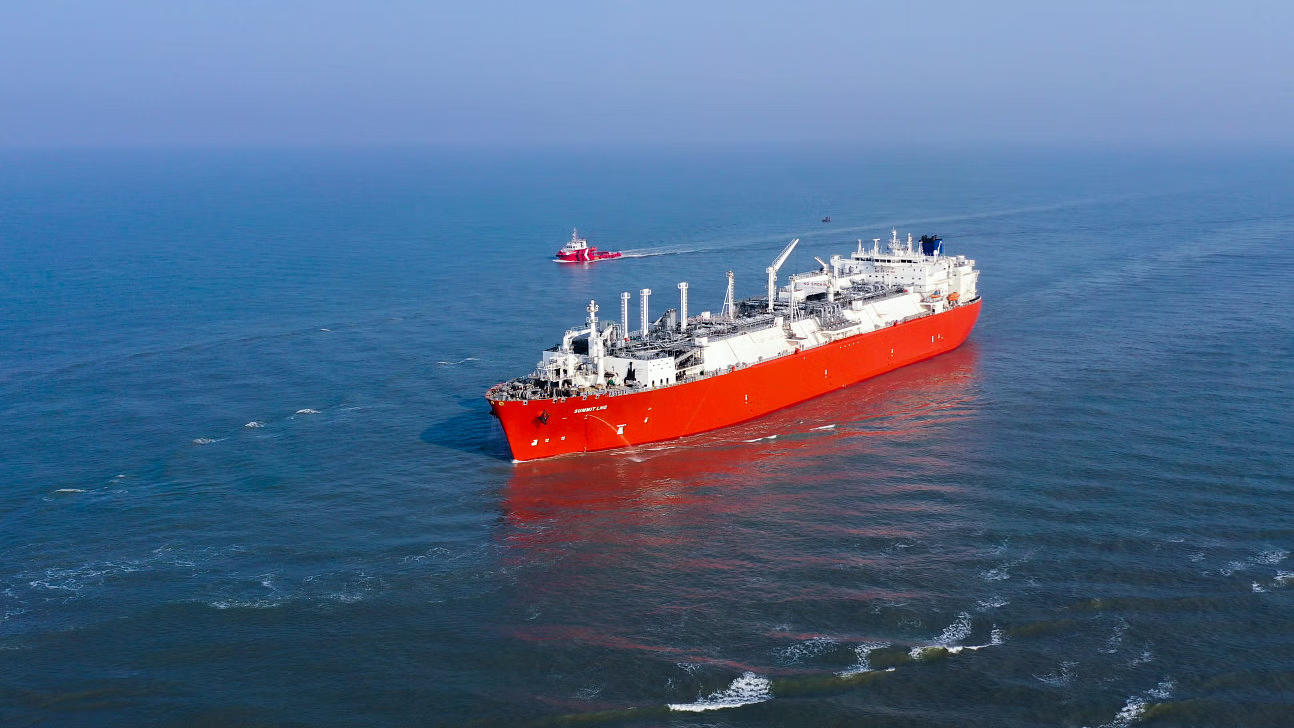
Tensions in the Middle East have rippled across Asia’s energy markets after Israel launched a pre-emptive airstrike on Iranian nuclear facilities, according to a report by S&P Global Commodity Insights.
The strike comes at a critical time—just as many Asian countries enter their summer season, when demand for gas-fired electricity surges. With Asia relying heavily on LNG from the Middle East—nearly 88% of the region’s imports—many governments and energy companies are now scrambling to reassess their supply plans.
“Importers are already talking to their suppliers and exploring backup options in case things get worse,” said Eric Yep, principal analyst at S&P Global.
So far, there haven’t been any actual disruptions. But there’s growing concern that continued escalation could impact the Strait of Hormuz—a vital shipping lane that moves around 11 billion cubic feet of LNG and 20 million barrels of crude oil every day.
Markets are already reacting. On June 13, the Japan-Korea Marker (JKM)—a key benchmark for LNG prices in Northeast Asia—jumped more than 5% to $13.44 per MMBtu, according to Platts.
Shipping companies aren’t taking any chances either. Japan’s Mitsui OSK Lines has issued safety alerts for vessels operating in the Persian Gulf, and some ship chartering deals are being paused. “There are no fresh offers today,” one chartering executive said, pointing to the increased risk.
Governments are moving quickly. South Korea’s energy ministry held an emergency meeting with LNG importers and promised fast action if needed. China, which gets about a third of its LNG from Qatar, could also be hit hard—especially as it continues to block LNG imports from the US.
As the situation unfolds, Asian countries are watching closely—hoping the region’s energy lifelines remain secure in uncertain times.
Be First to Comment